
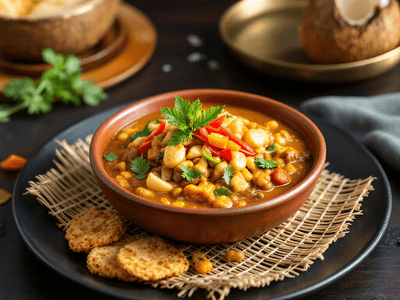
Polonnaruwa Dhal
Curries • Sri Lanka
ගැන Polonnaruwa Dhal
Dry-zone parippu with pungent goraka and maldive fish.
How to Make Polonnaruwa Dhal (Traditional & Healthy Version)
Polonnaruwa Dhal is a cherished Sri Lankan lentil curry, originating from the historic Polonnaruwa region in the North-Central Province. This dish embodies the heart of Sri Lankan home cooking, bringing together red lentils (masoor dhal) simmered in coconut milk and fragrant spices. The creamy texture and aromatic flavors make it a staple at everyday meals and festive gatherings alike. Known for its simplicity and depth of flavor, Polonnaruwa Dhal is beloved for its comforting taste and wholesome ingredients. Traditionally enjoyed with rice or roti, it delivers a mild heat balanced by the lushness of coconut milk and the warming touch of curry leaves and turmeric. The dish is not only vegan and gluten-free but also packed with plant-based protein and fiber, making it a fantastic option for those seeking nourishing, balanced meals. This healthy version stays true to Sri Lankan culinary traditions while using minimal oil and fresh, local ingredients. Whether you’re new to Sri Lankan cuisine or a longtime enthusiast, Polonnaruwa Dhal offers a delightful introduction to the island’s rich, spice-laden curries.
Ingredients(for 1 medium bowl (approx. 250g) with rice or roti)
- 1 cup Red lentils (masoor dhal) (split red lentils)
- 1/2 cup Coconut milk (fresh or canned)
- 2 cups Water (for boiling lentils)
- 1 medium Onion (finely chopped)
- 2 Garlic cloves (minced)
- 1 Green chili (sliced, adjust to taste) - optional
- 1/2 tsp Turmeric powder
- 8-10 Curry leaves (fresh, optional) - optional
- 1/2 tsp Mustard seeds
- 1/2 tsp Cumin seeds
- 1 small Tomato (diced)
- to taste Salt
- 1/4 tsp Black pepper (freshly ground) - optional
- 1 tsp Coconut oil (for tempering)
Instructions
- 1
Rinse the red lentils thoroughly under running water until the water runs clear. Drain and set aside.
2 minutes
Washing lentils removes excess starch and ensures a smoother curry.
- 2
Add lentils and 2 cups of water to a medium saucepan. Bring to a boil over medium heat, then reduce to a simmer. Skim off any foam and cook until lentils are soft (about 10 minutes).
10 minutes
Keep an eye on the water level; add a splash more if the dhal looks too thick.
- 3
Stir in turmeric, diced tomato, and salt. Simmer for another 5 minutes until the tomato softens and the dhal thickens.
5 minutes
Tomato adds gentle acidity and color to the dhal.
- 4
Pour in the coconut milk, stir well, and let it simmer on low heat for 3 minutes. Remove from heat once creamy.
3 minutes
Do not boil after adding coconut milk to preserve its flavor.
Why This Dish is Healthy
This dhal curry is a healthy option because it is low in saturated fat, provides a steady source of plant protein, and uses minimal oil. The incorporation of spices like turmeric and cumin boosts metabolism and supports digestive health. Coconut milk, when used in moderation, offers healthy fats that are easily digestible. With no added sugars or processed ingredients, it’s a wholesome, balanced meal perfect for anyone tracking calories or aiming for a nutrient-dense diet.
Polonnaruwa Dhal is rich in plant-based protein and dietary fiber, making it an excellent choice for muscle repair and digestive health. Red lentils provide essential nutrients like iron, folate, and potassium, while coconut milk delivers healthy fats and a creamy texture without dairy. The use of turmeric and garlic adds anti-inflammatory and antioxidant benefits, supporting overall immune health. This dish is naturally gluten-free, vegan, and low in saturated fat, making it suitable for varied dietary needs.
Pro Tips
- 💡Tip 1: Always use fresh curry leaves for the most authentic Sri Lankan aroma.
- 💡Tip 2: For thicker dhal, simmer uncovered for a few extra minutes after adding coconut milk.
- 💡Tip 3: Adjust the consistency by adding more water or coconut milk as needed.
Storage & Serving
Store leftover dhal in an airtight container in the refrigerator for up to 3 days. Reheat gently on the stove with a splash of water or coconut milk to restore creaminess. Freezing is not recommended, as coconut milk may separate.
Best served: Breakfast or Lunch
Nutrition Facts
| Nutrient | Per 100g |
|---|---|
| Energy | 125.0 kcal |
| Protein | 6.8 g |
| Carbohydrates | 14.0 g |
| Total Fat | 4.8 g |
| Fiber | 3.4 g |